

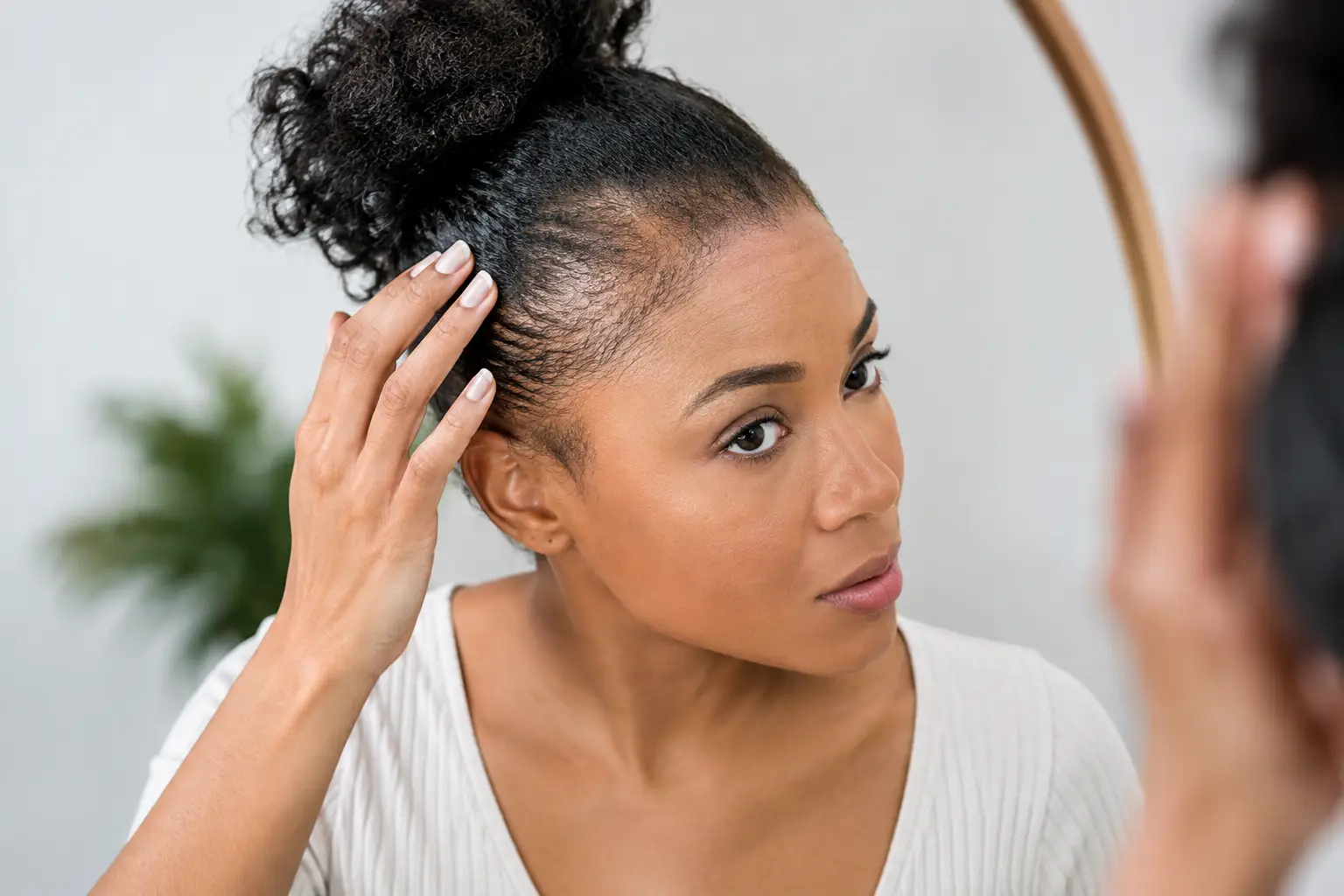
A tight ponytail may look polished for the day, but repeated pulling can gradually change the look and feel of the hairline. Traction alopecia recovery is possible for many people, particularly when tension is removed early. The key is recognizing the cause, giving the follicles a genuine break, and getting specialist advice before temporary shedding becomes permanent loss.
Traction alopecia occurs when hairstyles, extensions, hairpieces, or grooming habits repeatedly pull on the same areas of the scalp. It often starts at the temples, frontal hairline, and around the ears, although any area under regular tension can be affected. Because the changes can be subtle at first, many people do not seek help until the hairline appears noticeably thinner.
What traction alopecia looks and feels like
Early traction alopecia can cause tenderness, itching, small bumps, redness, or broken hairs along the hairline. You may also notice short, fine hairs that do not seem to grow beyond a certain length. These are signs that the follicles are under stress, not necessarily signs that they are gone.
As pulling continues, the hair may become sparse in a clear pattern that matches the hairstyle or attachment points. Braids, tightly secured wigs, weaves, extensions, slicked-back styles, and frequent use of tight clips can all contribute. This is not limited to one hair type or one gender. Any scalp can be affected when tension is repeated often enough.
A helpful distinction is that early traction alopecia usually has active follicles capable of producing hair. Long-standing traction can lead to scarring, where follicles are replaced by scar tissue. At that stage, spontaneous regrowth is less likely. That is why a changing hairline deserves attention sooner rather than later.
How traction alopecia recovery works
Recovery begins with removing the source of tension. This sounds simple, but it often requires changing a familiar routine. A style does not need to feel painful to cause damage. Consistent low-level pulling, especially on fragile or chemically treated hair, can still place strain on the follicle over time.
For non-scarring traction alopecia, shedding may settle within weeks after tension is stopped, while visible regrowth can take several months. Hair grows slowly, and density does not return evenly. Fine new growth may appear first, followed by thicker strands as the growth cycle normalizes. A six- to twelve-month timeframe is realistic for assessing meaningful change, although individual recovery varies.
The outcome depends on several factors: how long the pulling has occurred, whether there is inflammation or scarring, the health of the scalp, and whether another condition is contributing to hair thinning. Pattern hair loss, thyroid conditions, nutritional deficiencies, and inflammatory scalp disorders can overlap with traction alopecia. A professional scalp assessment helps separate these possibilities instead of assuming every thinning area has the same cause.
The first changes to make at home
The most effective immediate step is to choose low-tension styling. Wear the hair looser, rotate part lines, and avoid styles that pull at the edges or create a persistent tugging sensation. If you use extensions, wigs, or hair systems, proper fitting and attachment matter. A comfortable, secure solution should not leave the scalp sore, raised, or sensitive after removal.
Give the hairline room to recover between styling sessions. Limit frequent heat styling, aggressive brushing, harsh chemical processing, and tight overnight wrapping. These practices may not cause traction alopecia alone, but they can increase breakage and make a thinning hairline appear worse.
Scalp care should also be gentle. Avoid picking at bumps or trying to scrub away flakes with force. If there is pain, persistent irritation, pustules, or shiny areas of skin where hair used to grow, arrange a medical evaluation promptly. These symptoms can signal inflammation or scarring that needs more than a change in hairstyle.
When treatment may support regrowth
A dermatologist or qualified hair loss specialist may recommend treatment based on the stage and cause of loss. In some cases, topical treatments that support the growth cycle may be appropriate. If there is active inflammation, a clinician may address it with prescription treatment. These options should be selected after an assessment, particularly for people who are pregnant, breastfeeding, managing heart conditions, or taking other medications.
Low-level laser therapy may also be considered as a noninvasive way to support scalp and follicle health in appropriate candidates. It is not a substitute for stopping traction, and it will not revive follicles that have been permanently scarred. However, for early thinning or for people with a combination of traction and pattern-related loss, it can be part of a broader plan.
Nutritional support is sometimes discussed, but supplements are not a shortcut for a tension-related problem. Taking high-dose vitamins without a confirmed deficiency may not improve growth and can occasionally create other health concerns. A clinician can advise whether blood work or nutritional evaluation makes sense for your situation.
Cosmetic coverage while your hair recovers
Waiting for hair to grow can feel frustrating, especially when the hairline is visible in bright office lighting, photos, or professional settings. Cosmetic solutions can provide confidence during recovery without requiring you to hide at home. The right option should protect the scalp and avoid repeating the same tension that caused the issue.
For diffuse thinning, a carefully designed non-surgical hair replacement solution can create natural-looking density and coverage. It should be fitted to your lifestyle, scalp sensitivity, and preferred hairstyle. For a receding or sparse hairline where regrowth is limited, scalp micropigmentation can reduce the contrast between hair and scalp, giving the appearance of fuller density or a more defined hairline.
Some people may eventually consider a hair transplant, but timing matters. Transplantation is generally not the first response to active traction alopecia. The pulling must stop, the scalp should be stable, and a clinician should confirm that the recipient area is suitable. When scarring is present, results can be less predictable because scar tissue has a different blood supply and healing response.
At HairSpec, a private scalp assessment can help identify whether your concern appears consistent with traction-related loss, whether there are signs of another cause, and which restorative or cosmetic pathway fits your goals. A personalized plan is particularly useful when you want visible improvement without committing to a one-size-fits-all solution.
Styles and habits that protect the hairline
A recovery-friendly routine is not about giving up every styling option forever. It is about reducing force, varying your habits, and noticing your scalp’s feedback. Choose styles that allow movement at the roots, and do not use pain as the benchmark. If the scalp feels tight, heavy, tender, or itchy after styling, the tension is likely too high.
Be especially cautious with regular re-tightening. Extensions and braided styles can feel fine on day one but become more stressful as natural hair grows and the attachment shifts. Schedule maintenance before discomfort develops, and ask your stylist to prioritize scalp health over an ultra-tight finish.
If you wear wigs or hairpieces, avoid clips, adhesives, or attachment methods that repeatedly pull on already fragile edges. A specialist can discuss alternatives that distribute pressure more evenly. This is where convenience and long-term recovery sometimes conflict: the quickest way to secure a style may not be the gentlest. Choosing comfort is an investment in the hair you want to keep.
When to seek professional advice
Do not wait for complete bald patches to get help. Early assessment is worthwhile if you see widening at the temples, broken fringe hairs, reduced density around the edges, or scalp discomfort linked to styling. Seek timely medical care for smooth or shiny patches, significant redness, scaling, drainage, or rapid hair loss.
Traction alopecia can carry a real emotional weight, especially when your hairstyle has long been part of your identity. There is no need to minimize that experience or accept ongoing damage as the cost of looking put together. With the source of tension addressed early and the right support in place, many people can protect their follicles, encourage recovery, and feel more confident about what they see in the mirror.