

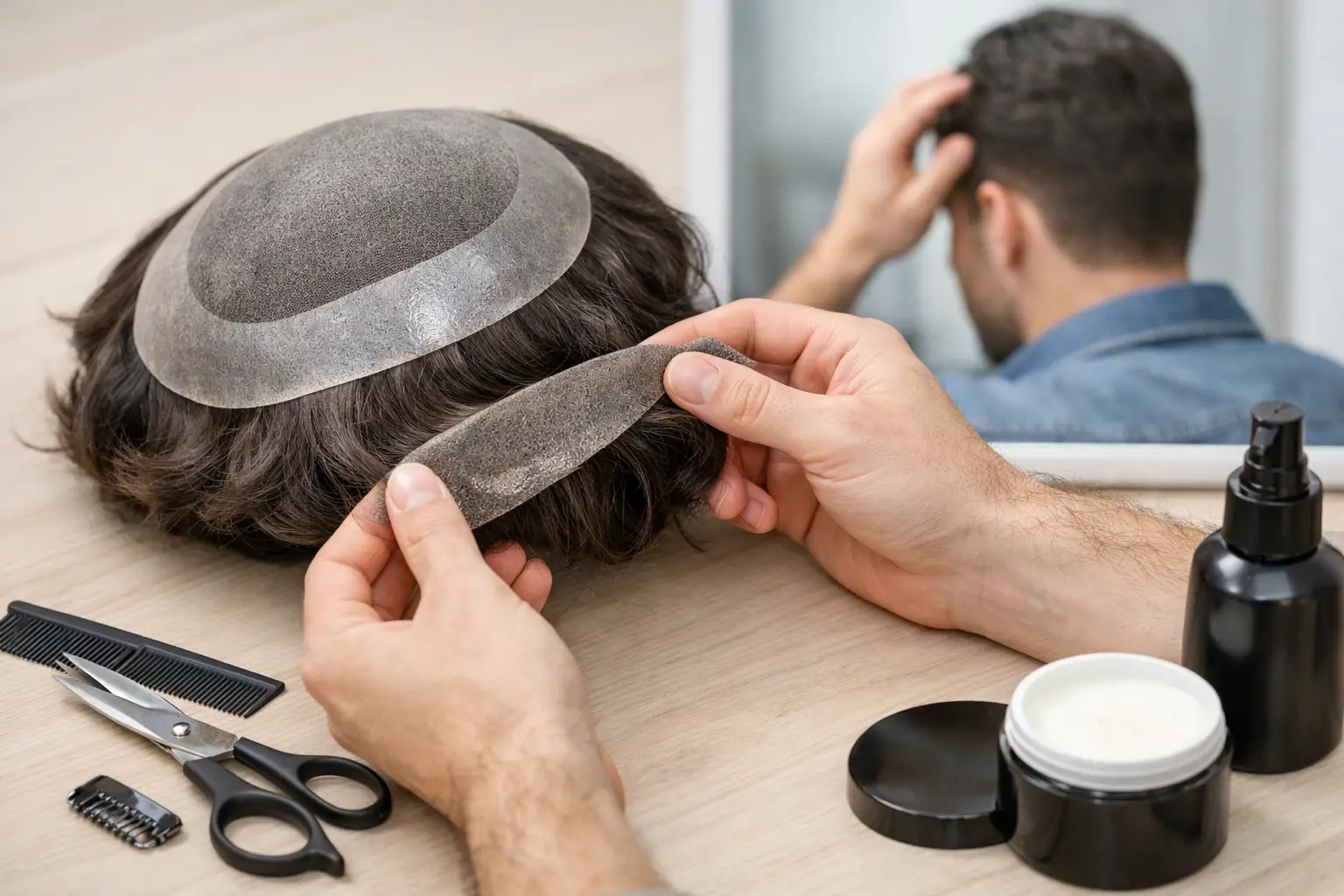
The first time most people look into a hair system, they are not chasing a dramatic makeover. They usually want one thing – to look like themselves again without the daily stress of thinning areas, visible scalp, or styling around hair loss. This complete hair replacement system guide is designed to make that decision clearer, with practical answers on how systems work, who they suit, and what to expect before you commit.
What a complete hair replacement system guide should actually cover
A good hair replacement guide should do more than describe a product. It should help you understand fit, realism, maintenance, comfort, and whether a non-surgical approach makes more sense than treatment or surgery for your stage of hair loss.
A hair replacement system is a custom or semi-custom solution that covers areas of thinning or baldness using human hair or synthetic hair attached to a base that blends with the scalp. Depending on the design, it can address partial hair loss, crown thinning, receding hairlines, or more advanced loss. For some people, it is a cosmetic solution. For others, it is a confidence-restoring option after medical hair loss or years of frustration with low-density hair.
What matters most is that the result looks natural in normal life – under office lighting, outdoors, during conversations, and at close range. That is why material choice, density, color match, and attachment method matter far more than marketing claims.
Who is a good candidate for a hair replacement system?
Hair systems can work well for men and women who want visible improvement without surgery. They are often a strong fit for people with pattern hair loss, diffuse thinning, patchy loss, or medically related hair changes. They can also suit clients who are not ready for a transplant, are not medically suitable for one, or simply prefer a reversible option.
This is where expectations matter. If you want immediate density and a defined style, a hair system can deliver that faster than regrowth treatments. If your goal is to stimulate your existing follicles, then therapies such as low level laser treatment, mesotherapy, or medical assessment may also need to be part of the conversation. In many cases, the best plan is not either-or. It depends on the cause of your hair loss, your lifestyle, and how much daily involvement you want.
For professionals and image-conscious adults, discretion is often just as important as results. A well-designed system can offer both, especially when it is fitted and maintained by specialists who understand scalp condition, hairline design, and natural movement.
Types of systems and how they differ
Not all hair systems feel or perform the same. The base material has a major effect on realism, breathability, durability, and maintenance.
Lace bases are known for a light feel and good ventilation. They are often comfortable in warmer climates and can create a natural appearance, especially at the front hairline. The trade-off is that they may require more delicate handling.
Skin or poly bases tend to create the look of hair growing directly from the scalp. They can be very convincing and are often easier to clean, but some wearers find them less breathable than lace depending on the thickness and construction.
Monofilament and hybrid designs combine features to balance comfort, strength, and realism. For someone with an active routine or specific styling needs, a hybrid system may be more practical than choosing the thinnest possible base.
Hair type matters too. Human hair usually offers the most natural movement and styling flexibility. Synthetic options can be more budget-conscious and lower effort in some cases, but they may not replicate natural texture and heat styling as well. The right choice depends on how often you style your hair, your budget, and how natural the finish needs to look up close.
The importance of customization
The systems that look most convincing are rarely the ones chosen off a shelf with minimal adjustments. Good customization takes into account your hair color, gray percentage, density, wave pattern, scalp sensitivity, face shape, and how you normally wear your hair.
Hairline design is particularly important. Many people assume a fuller hairline looks younger, but overly dense front sections often look less believable than a softer, age-appropriate design. The same is true for density across the top. Natural-looking hair is not just about adding more. It is about placing the right amount in the right areas.
A proper consultation should also consider your daily routine. If you work long hours, exercise frequently, or want a low-fuss grooming schedule, that affects the type of base, bonding method, and replacement schedule that will suit you best.
Attachment methods and what they mean for daily life
Hair systems can be attached using tapes, liquid adhesives, clips, or integration techniques depending on the design and the amount of existing hair. Each option affects wear time, scalp feel, removal, and maintenance.
A longer-wear adhesive bond can be convenient if you want the system to stay secure through work, commuting, and regular activity. It can also reduce the need for daily handling. However, it usually requires a proper cleaning and reattachment schedule to keep the scalp healthy and the hairline looking neat.
A removable option may suit people who want flexibility or have sensitive skin, but it may require more hands-on effort. There is no universal best method. The right one depends on your scalp condition, lifestyle, and comfort with upkeep.
This is one reason specialist guidance matters. A system should not just look right on day one. It should remain comfortable and believable over time.
Maintenance is where expectations need to be realistic
One of the biggest misconceptions is that a hair replacement system is a one-time fix. In reality, it is a high-impact cosmetic solution that needs regular care.
Maintenance usually includes cleansing the scalp and base, reattaching the system as needed, trimming, color blending, and replacing the unit when it reaches the end of its lifespan. How often that happens depends on the base material, how often you wear it, your climate, your activity level, and how carefully it is handled.
If you want the most undetectable finish possible, upkeep becomes part of the investment. That does not mean it has to be difficult. It means you should go in knowing that natural-looking results come from good design plus consistent maintenance.
For many clients, professional servicing makes the experience much easier. It helps preserve the system, supports scalp hygiene, and keeps the style polished. In a specialist setting such as HairSpec, this is often where clients feel the difference between a simple cosmetic purchase and a complete hair loss care plan.
Cost, value, and what you are really paying for
Hair system pricing varies widely, and cheaper is not always better value. The total cost includes more than the unit itself. It may include consultation, customization, cutting, fitting, products, maintenance appointments, and replacement frequency.
A lower-cost system may seem attractive at first, but if the hairline looks artificial, the density is wrong, or the base wears out quickly, the savings disappear fast. On the other hand, the most expensive option is not automatically the right one either. Some people need maximum realism for daily professional visibility. Others need a practical, comfortable solution that fits a set budget.
A trustworthy provider should explain what is included, how long the system is likely to last, and what ongoing care will involve. Clear expectations are part of good care.
Hair system or another solution?
This is where the complete hair replacement system guide becomes more than a product overview. Hair loss solutions are not interchangeable, and the right answer depends on your goals.
If you want instant density, a hair system often gives the fastest visible change. If you want a low-maintenance look created through pigment rather than hair, scalp micropigmentation may be worth considering. If you still have active follicles and want to support regrowth, low level laser therapy or mesotherapy may be relevant. If you want a permanent surgical option and have suitable donor hair, a transplant may enter the conversation.
Many clients benefit from combining approaches. Someone might use a non-surgical system now while treating underlying thinning at the same time. Another person may choose a hair system because they value control, privacy, and reversibility more than surgery.
That is why a consultation-led approach matters. The best recommendation is based on your scalp, your pattern of loss, your lifestyle, and the result you want to maintain.
Questions to ask before you choose
Before moving forward, ask how the system will be customized for your hairline, what maintenance schedule is realistic, how the scalp will be protected, how often the unit may need replacement, and what kind of support is available after fitting. You should also ask to see what a natural density and age-appropriate design look like, not just the fullest result possible.
A good provider will answer clearly, without pushing a one-size-fits-all option. Hair loss is personal, and the right solution should feel personal too.
Choosing a hair replacement system is not about pretending hair loss never happened. It is about taking control of how you want to look and feel, with a solution that fits your life as it is now.